
Mental illness affects us all, and it’s not getting better.
When I was five years old, my mother gave up custody of me. She was struggling to take care of me due to her history of mental illness, and thought I’d have a better life in a two-parent household. Like many families, my family has a history of mental illness. But I rarely spoke about it. I never spoke about my grandfather’s struggle with schizophrenia and how it caused my mother to leave home before she graduated from high school. I never spoke about how, as an adult, I was diagnosed with ADHD that is very similar to my mother’s. I never spoke about how managing this condition affects my life as a scientist, entrepreneur, partner, and parent.
I often spoke about the importance of neurotech for addressing mental health, but I almost never spoke about how it was affecting my life. I was embarrassed, ashamed, and afraid. I was afraid that people would think less of me. I was afraid that in the competitive world of academia and venture-backed startups, people would go elsewhere with funding and opportunities.
Fear is one reason why many of us remain silent about mental health. And silence is one reason why we may not appreciate how prevalent mental health disorders are. One in five Americans suffers from a mental illness. Suicide is currently the #2 leading cause of death for adults aged 18-35 [1]. If you aren’t affected directly, you likely have close friends and loved ones who are.
What is most shocking about these numbers is the fact that, by almost every metric, technological breakthroughs in medicine and technology have improved our quality of life over the last several decades, but mental illness has declined. Over the past 20 years, the number of people in extreme poverty has improved from one in five to one in fourteen globally [2]. But over that same period, depression has risen by 144% in high-school-aged children, and suicides have grown by 58% in the same group [3].
Society is changing faster than our brains can evolve
The pace at which technology is changing how we live is faster than ever, and that pace is accelerating. For roughly 400 years, information was primarily disseminated through printing presses and postal delivery. Then, in only 150 years, primary information transfer changed from telegraph to telephone, then fax machines, followed by email and text. AI will likely change society even faster and more profoundly than the information age. On an evolutionary time scale, 150 years is but an instant.
One reason why our mental health is declining is the fact that our brains have not evolved to deal with the challenges of today’s world. Our brain can adapt to changes in our environment, but only if those changes occur over millions of years. Behaviors that humans evolved only a few thousand years ago may be poor fits for today’s society. Our impulse to seek out and share news of threats may have served humanity well when information spread slowly among bands of foragers, allowing them to avoid dangerous destinations. But now, with constant access to an unending feed of threatening news, that impulse can lead to doomscrolling and associated increases in anxiety [4].
There is hope, however, that the very technology contributing to declining mental health may also be the solution to overcoming mental illness and thriving in a rapidly changing world.
Technology can be the solution to declining mental health: A “Moore’s Law” for Neurotech
One thing that can match the current pace of societal change is technology itself. But how can technology address something as complex as mental health?
It’s helpful to look at how exponential changes in better performance and lower cost led to the personal computing revolution. In 1965, Gordon Moore observed that the number of transistors per square millimeter was doubling roughly every two years due to advances in semiconductor manufacturing. This observation had two important implications: 1) With more transistors, the performance of semiconductor devices should grow exponentially, and 2) By producing more transistors in each manufacturing run, the cost per transistor should drop exponentially. Human intuition is notoriously poor at predicting how dramatic exponential growth can be (my poor investing habits are a testament to that). By 1985, Moore’s Law had continued to the point that the density of transistors had grown by 100X. And yet it was not obvious how these exponential changes in cost and performance would fundamentally change our relationship with computing. At that time, Microsoft was chasing what some considered the foolhardy goal of seeing a computer on every desk and in every home. Now, 40 years later, it is estimated that there are roughly 5 computing devices per person, globally [5]. Similar exponential improvements in performance led to the mass adoption of technologies like light-emitting diodes (LEDs) and solar panels (Table 1).
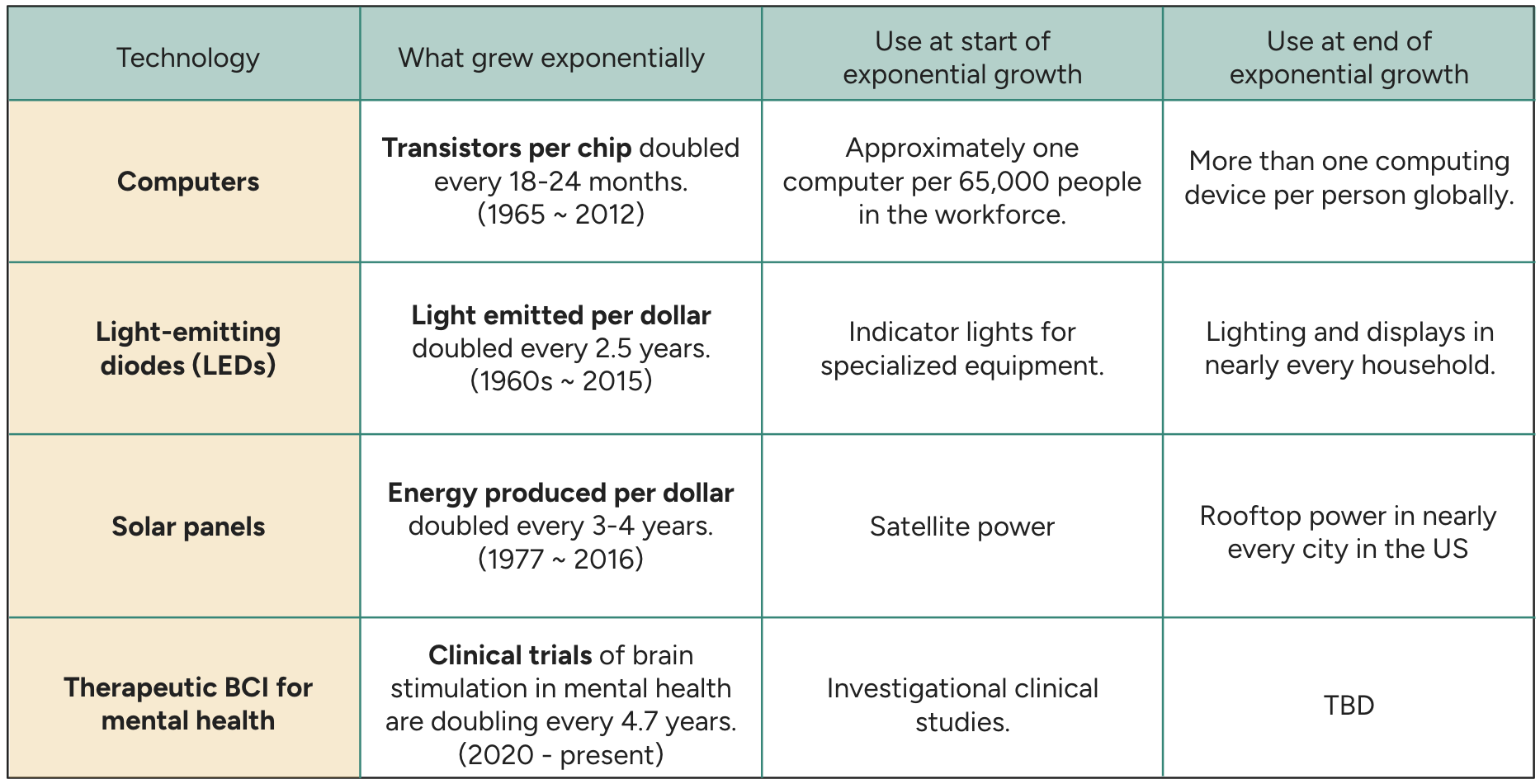
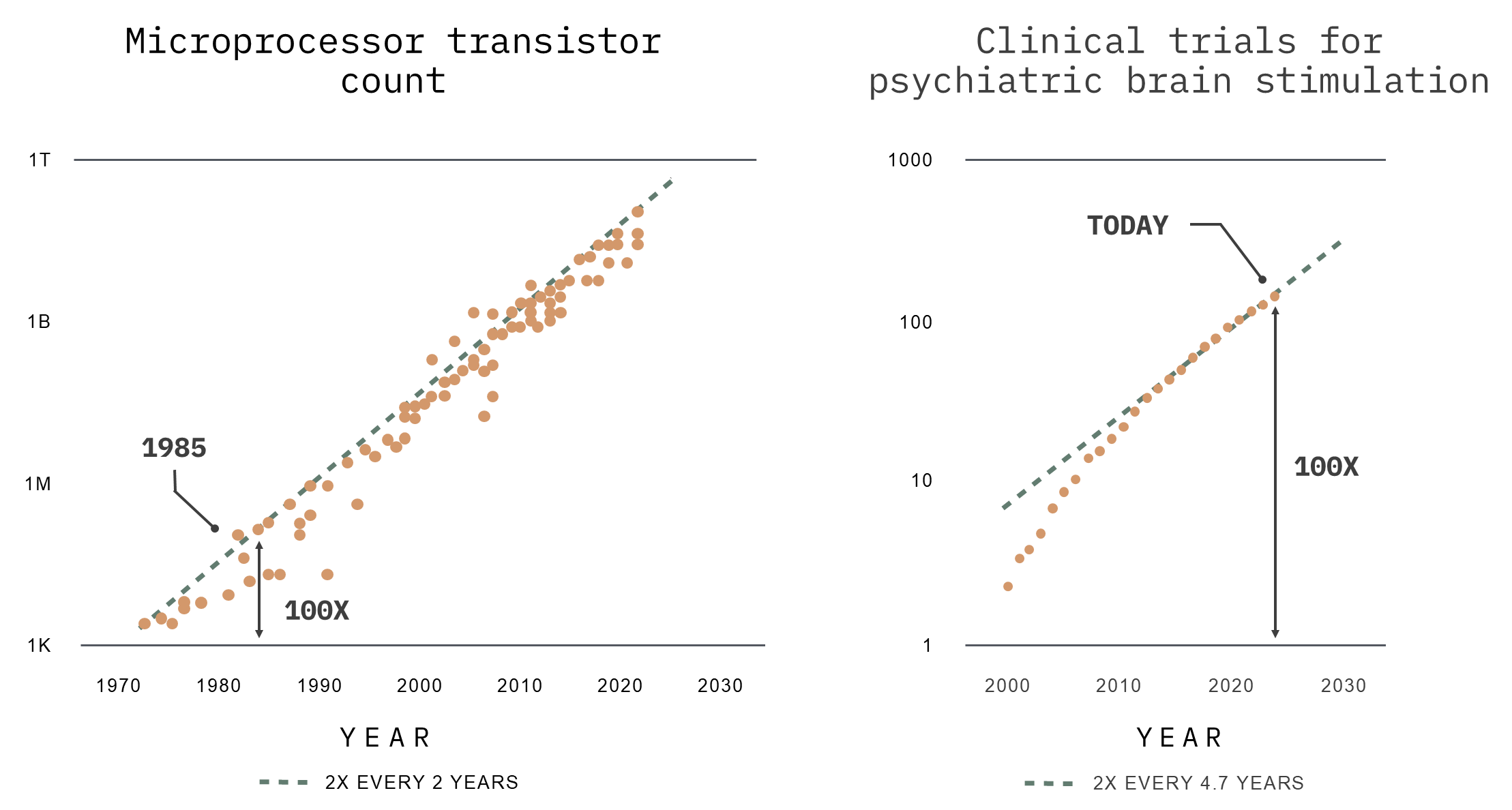
Today, exponential improvements in performance and cost of neurotech could lead to a revolution as profound as personal computing. Since 2000, clinical trials for brain stimulation applied to mental health have grown exponentially with a doubling time of roughly 4.7 years [6] (Fig. 1).
The exponential growth of clinical brain stimulation for mental health is similar to Moore’s law in how it increases performance and decreases costs to consumers. For transistors, the primary performance metrics are flops or clock speed. For therapeutic neural devices, the primary performance metrics are clinical outcomes: how many people get better, and how much better do they get? The biggest hurdle to better clinical outcomes is understanding how brain stimulation can improve mental health. While animal studies can assist in that pursuit, mental health often affects behaviors that are difficult to reproduce and assess in animals. As a result, our ability to improve clinical outcomes mainly results from clinical trials.
Consider, for example, recent work in accelerated transcranial magnetic stimulation (TMS) for depression. TMS activates the brain non-invasively using a large magnetic field produced by a bench-top-sized electromagnet in a doctor’s office. Early clinical trials using TMS to stimulate regions in the prefrontal cortex in people who suffer from depression but failed to respond to multiple antidepressant medications showed roughly 50% response and 30% remission [7]. A series of subsequent clinical trials investigated more precise targeting, changes in the pattern of brain stimulation, and increases in the number of stimulation sessions. Based on these learnings, more recent studies have reported remarkable response rates of over 80% and remission rates over 65% [8]. This is compared to pharmacological antidepressants that typically show remission and response rates of roughly 30-40% [9].
Better clinical outcomes driven by exponential growth in clinical trials will also lead to reduced costs to consumers. Many people receiving neural device interventions have these products or procedures paid for by insurance companies, but these payors are reluctant to cover therapies that are unlikely to work or deliver only modest results. As a result, many neurotech treatments require high-cost and high-effort prior authorization or high out-of-pocket costs. As outcomes improve, insurance companies will save more money when patients receive neural device interventions. With more savings resulting from neurotech, insurance coverage of these procedures will become more frequent and easier to obtain. Thus, better outcomes driven by the exponential growth of clinical trials will drive up “performance” and drive down costs to the consumer/patient, similar to Moore’s Law for semiconductors.
We are still in the early days of the exponential growth of clinical trials in brain stimulation for mental health, so it may be difficult to appreciate how dramatically it will reshape how we think about neural devices. Indeed, since 2000, the cumulative number of clinical trials has increased by 100X, the same amount of growth experienced by the semiconductor industry in 1985. We should, therefore, not be surprised if the concept of neural devices as the mainstream solution for mental health is considered as foolhardy as the 1985 concept of a “personal computer” for everyone.
The road ahead: Neural devices will help everyone live a better life.
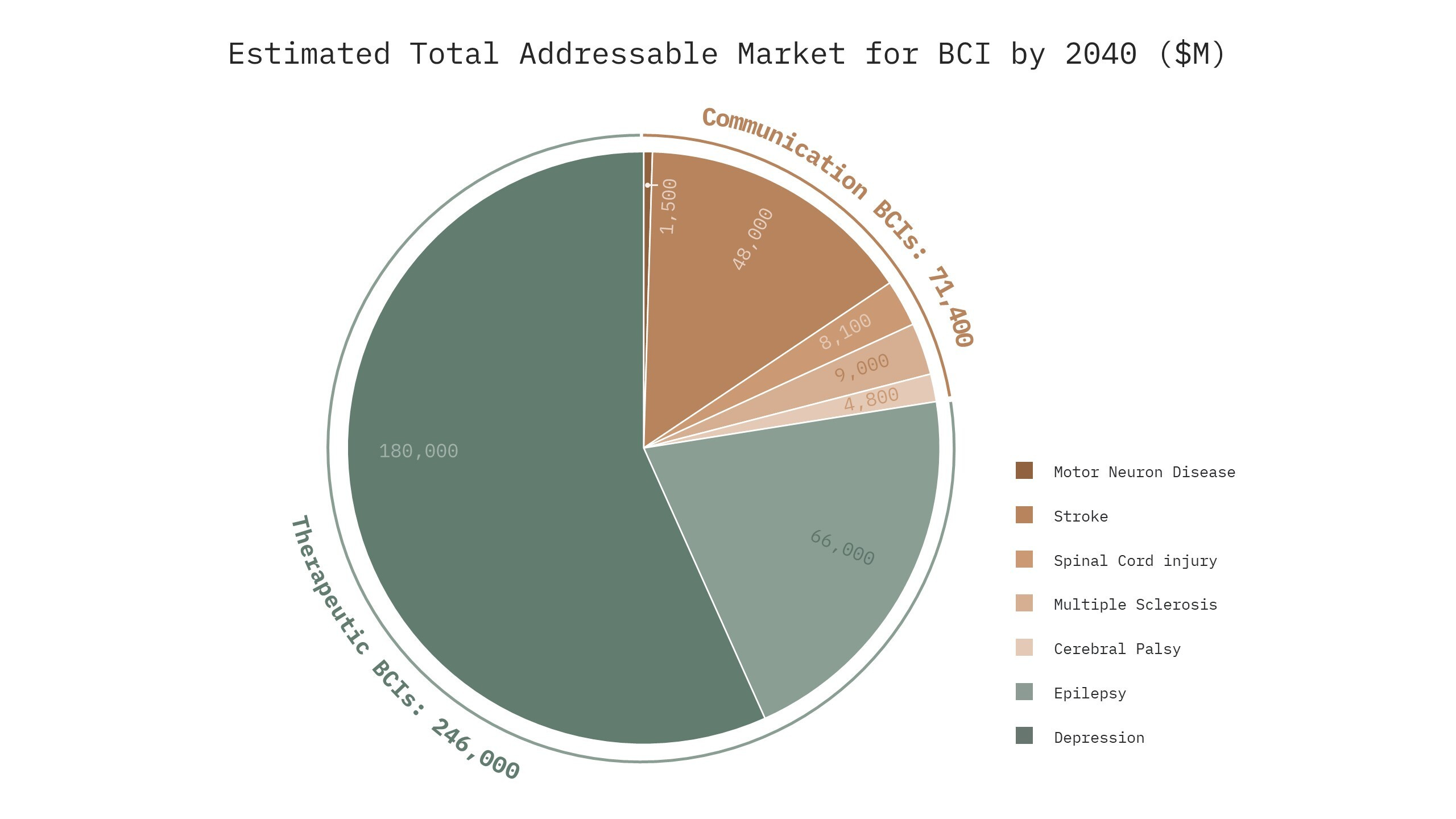
There is no way to know exactly what the era of “neural devices for everyone” will look like, but we can try to extrapolate based on the current state of the art. Neurotech is already helping people regain the ability to speak and control computers via implanted “communication brain-computer interfaces (BCIs)” [10]. As safety and performance continue to improve, along with reduced cost (to consumers), it stands to reason that the market for communication BCIs will grow to include people with mild motor or communication deficiencies. Indeed, a recent report from Morgan Stanley estimated that by 2040, the market for BCI will exceed $400B, with roughly $70B related to communication BCI [11].
Neural devices for mental health represent an even larger opportunity than communication BCIs. “Therapeutic BCIs” that help people regulate mental states in conditions like depression, bipolar disorder, and anxiety could help the roughly 1 in 5 people who suffer from a mental health disorder [12]. The Morgan Stanley report on the BCI market estimates that the market for depression alone represents roughly $180B of the $400B market opportunity [13] (Fig. 2). That analysis did not even include other mental health or neurodegenerative disorders for which TMS and other brain stimulation technologies are showing compelling clinical data [14]. Thinking even farther into the future, virtually everyone is trying to regulate their brain activity to improve their focus and mood. Coffee is the second most popular beverage in the US behind bottled water [15]. There is likely a point at which the safety, efficacy, and price of electronic devices that help regulate and monitor mental states will make them popular as caffeinated beverages.
Future neural devices will almost certainly consist of implanted and non-implanted technologies, but there may be a surprising preference for implanted technologies. While it is often assumed that people will always prefer non-implanted technologies over implants, historically, this choice is much more nuanced. “Invasiveness” is a subjective experience of the consumer and includes aspects like how something looks to wear and how much it interferes with daily life [16]. For example, there are implantable and non-implantable versions of cardiac defibrillators, but the implanted versions out-sell the wearable versions by a ratio of roughly 5 to 1 [17, 18]. The choice between implanted and non-implanted solutions for neural devices will likely also come down to concerns about their relative effectiveness, visibility, and how they affect activities of daily living.
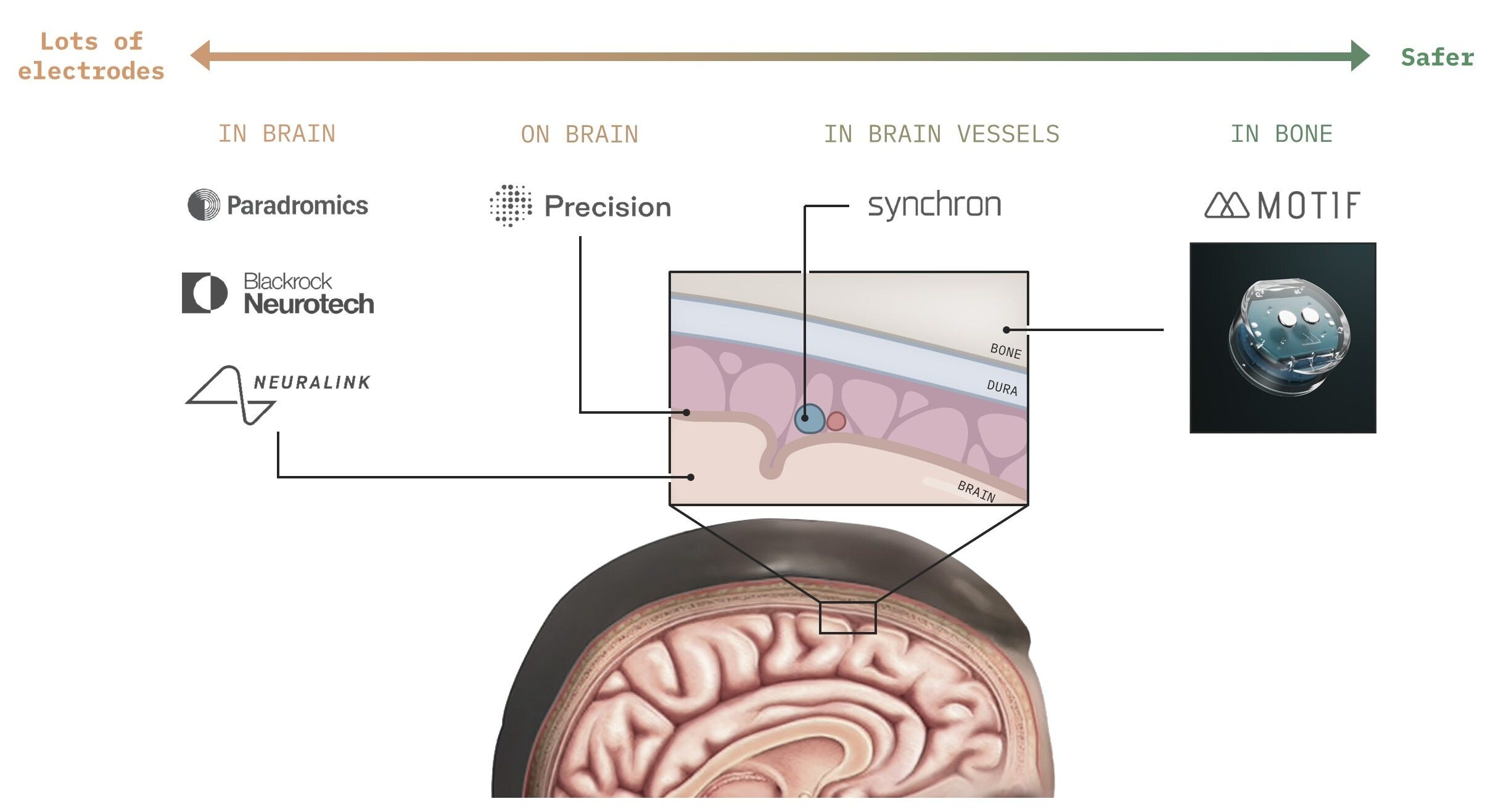
At Motif Neurotech, the company I co-founded three years ago, we believe implanted solutions for mental health that are cosmetically invisible and avoid brain surgery will provide the type of high benefit and low risk that will make it the preferred way to treat the broad spectrum of mental health disorders affecting 20% of the world’s population. It may even provide therapies for Alzheimer’s disease [20] and sleep disorders [21] that are also associated with dysregulated neural network states. Better regulation of mental and cognitive states would benefit almost everyone. That’s why we are creating miniature implants that can stimulate and record brain activity from within the bone following a 30-minute outpatient procedure. Because the mental health applications of Therapeutic BCIs likely do not require the high data rates needed for communication BCIs Motif can compromise on the number of electrodes to achieve a safer implantation procedure that avoids any contact with brain tissue Fig. 3. Like other BCI companies we are working through the FDA approval process and expect to be in clinical trials next year.
Ultimately, the future where anyone can live a better life with a neural device is an optimistic vision for the future. When neural devices are widely adopted, it will be because they create an incredible benefit at a low cost and with high safety. In that world, people can better regulate their mental states so they can be their best selves despite the challenges of living in a rapidly changing world. It is a world where we use neurotech not to merge with an AI super-intelligence, but to preserve the best of our humanity. It is a world where parents, unburdened by mental illness, can better care for their children, and those children can grow up with more opportunities to thrive.